
Why AI Projects Fail Without Planning
AI projects fail more often than they succeed. The reason is rarely the technology itself. Instead, projects collapse because teams skip the assessment phase. They jump straight into development without validating whether AI is the right solution, whether their data supports it, or whether the costs make business sense.
The numbers confirm this pattern. Gartner predicts that more than 40% of agentic AI projects will be canceled by 2027. The primary causes are unclear business value and escalating costs. Both problems are preventable — with proper planning.
At Pegotec, we treat planning as insurance against wasted investment. Before writing any code, we validate the idea, assess the data, design the architecture, and estimate the true cost. This approach does not slow you down. It ensures that when development begins, your team builds with confidence rather than assumptions.
Our engineers have delivered hundreds of software projects over nine years. That experience taught us a consistent lesson: thorough planning is the fastest path to production. Skipping it is the fastest path to budget overruns.
Our Planning Process
Every AI project planning engagement follows five structured steps. Each step produces a clear deliverable and a decision point before moving forward.
Step 1: Feasibility Assessment
First, we determine whether AI is the right solution for your problem. Not every business challenge requires machine learning or large language models. Sometimes, a well-designed rule-based system delivers better results at a fraction of the cost. We evaluate your use case against proven AI patterns and give you an honest recommendation. If AI is not the answer, we say so — and suggest alternatives.
Step 2: Data Readiness Evaluation
AI depends on data. During this step, we assess whether your organization has the data AI needs. We review data quality, volume, format, and accessibility. Many companies discover gaps at this stage — missing historical records, inconsistent formats, or data locked in systems without APIs. Identifying these gaps early prevents costly surprises during development.
Step 3: Architecture Design
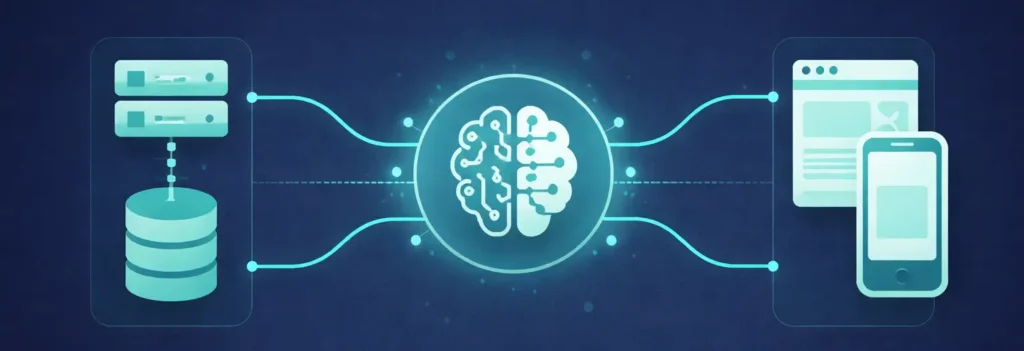
Next, we design how AI fits into your existing technology stack. This includes selecting the right AI models, defining integration points, and planning the data flow between systems. We consider your current infrastructure — whether that is a Laravel backend, a Flutter mobile app, or a third-party SaaS platform. The result is an architecture that adds AI capabilities without disrupting what already works.
Step 4: Cost Estimation
AI projects carry two types of costs: upfront development and ongoing API usage. We estimate both with realistic ranges. Development costs cover engineering, testing, and deployment. Ongoing costs include AI model API calls, token usage, hosting, and maintenance. You receive a clear financial picture — not an optimistic guess that doubles after launch. For context on managing ongoing AI expenses, see our guide on reducing AI costs.
Step 5: Timeline and Milestone Planning
Finally, we create a phased implementation roadmap. Rather than planning one large release, we break the project into milestones with measurable outcomes. Each phase delivers working functionality that stakeholders can evaluate. This approach reduces risk and provides natural decision points to adjust scope, budget, or direction based on real results.
What You Get
At the end of the planning engagement, you receive a complete set of deliverables that guide the entire implementation.
AI Feasibility Report. An honest go or no-go recommendation based on your specific use case. If AI is not the right fit, we explain why and suggest practical alternatives. No vendor will benefit from selling you a solution that does not work.
Technical Architecture Document. A detailed blueprint of how AI integrates into your systems. This covers model selection, API design, data pipelines, and infrastructure requirements. Your development team — whether internal or external — can use this document to begin building immediately.
Cost Projection—a breakdown of development costs and ongoing AI expenses with realistic ranges. We include best-case and worst-case scenarios so you can budget with confidence. Understanding the full financial picture up front prevents cost surprises that derail projects.
Phased Implementation Roadmap. A milestone-based plan with clear deliverables, timelines, and success criteria for each phase. Stakeholders can track progress against concrete outcomes rather than vague development updates.
Risk Register—a documented list of technical, operational, and financial risks with specific mitigation strategies. Every AI project carries uncertainty. Acknowledging and planning for risks is far more valuable than pretending they do not exist.
When to Plan vs. When to Build
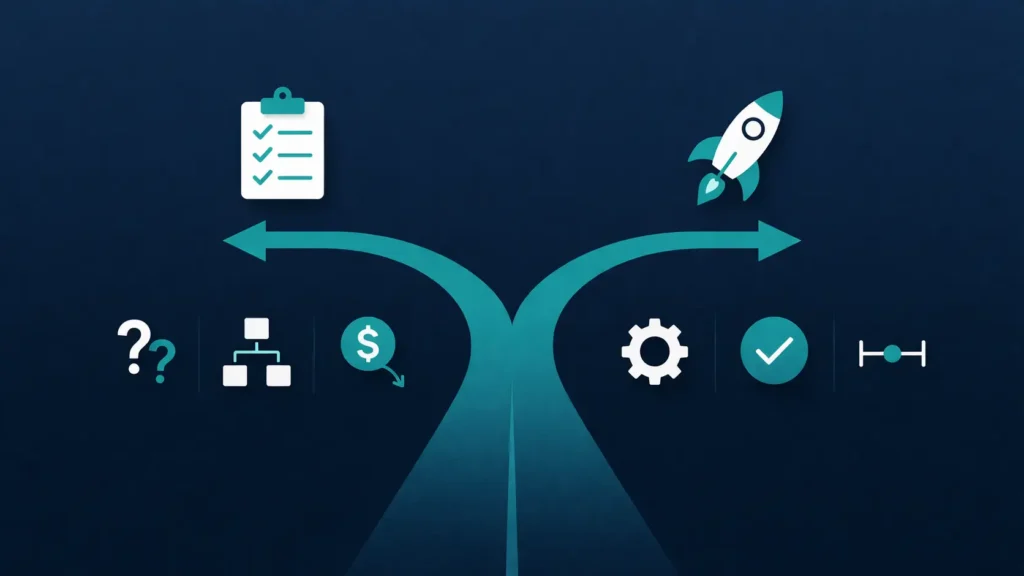
Not every project needs a full planning phase. Some initiatives can move straight to development. Knowing the difference saves both time and money.
Skip to development when: the scope is small, the use case is well-defined, and you are following a proven pattern. For example, adding a chatbot to your website using an established framework is a known quantity. The architecture decisions are straightforward, and the costs are predictable.
Invest in planning when: this is your first AI project, the integration touches multiple systems, or the ROI is unclear. Complex projects with ambiguous requirements benefit most from structured assessment. Planning catches wrong assumptions before they consume your budget.
Consider the cost comparison. A two-week planning engagement typically costs a fraction of what a failed development sprint would. If planning reveals that your data is not ready or the expected ROI does not justify the investment, you save months of engineering effort. That knowledge alone delivers value.
For organizations that need broader strategic guidance beyond a single project, our AI consulting service provides comprehensive AI strategy and opportunity mapping across your business.
Frequently Asked Questions
Most planning engagements take two to four weeks, depending on the complexity of your use case and the number of systems involved. A straightforward single-system integration may need only two weeks. Projects involving multiple data sources, legacy systems, or regulatory requirements typically require three to four weeks. The deliverables include a feasibility report, an architecture document, a cost projection, and a phased roadmap.
We tell you honestly. If the feasibility assessment reveals that AI will not deliver a meaningful return on investment, we recommend alternatives. These might include rule-based automation, improved data workflows, or process redesign. You still receive a complete report documenting our findings and recommendations. This outcome is not a failure — it saves you from investing in a solution that would not have worked.
Yes. For projects where stakeholders need to see AI in action before committing to full development, we can include a lightweight proof of concept as part of the planning phase. The prototype validates the core AI capability with real data, providing your team with tangible evidence to support the investment decision. This approach adds one to two weeks to the planning timeline but significantly reduces uncertainty.
Start Your AI Project the Right Way
Every successful AI implementation starts with a clear plan. Whether you are exploring your first AI use case or evaluating a complex integration, our planning service provides the clarity you need to invest wisely—no commitments, no hype — just an honest assessment of what AI can do for your business.
Contact Pegotec to schedule an AI project planning consultation.