
AI features require ongoing attention that traditional software does not. Models change — providers release new versions monthly. Costs drift upward without anyone noticing. Prompt effectiveness degrades as user behavior shifts. Meanwhile, most companies launch AI features and then move on to the next project.
That approach creates a growing problem. Without active maintenance, AI features become expensive, unreliable, and eventually outdated. The model you integrated six months ago may already have a faster, cheaper successor. The prompts you tuned at launch may now produce inconsistent results. Your costs may have doubled without any visible improvement in quality.
Pegotec’s AI-enhanced software maintenance service solves this. We keep your AI features efficient — not just running. Our team continuously monitors costs, updates models, optimizes prompts, and tracks performance. As a result, your AI investment continues to deliver value long after launch.
What AI Maintenance Covers
AI maintenance goes well beyond traditional bug fixes and server monitoring. It requires a specialized skill set that combines software engineering with an understanding of the AI model landscape. Here is what our maintenance service includes.
AI Cost Monitoring and Optimization
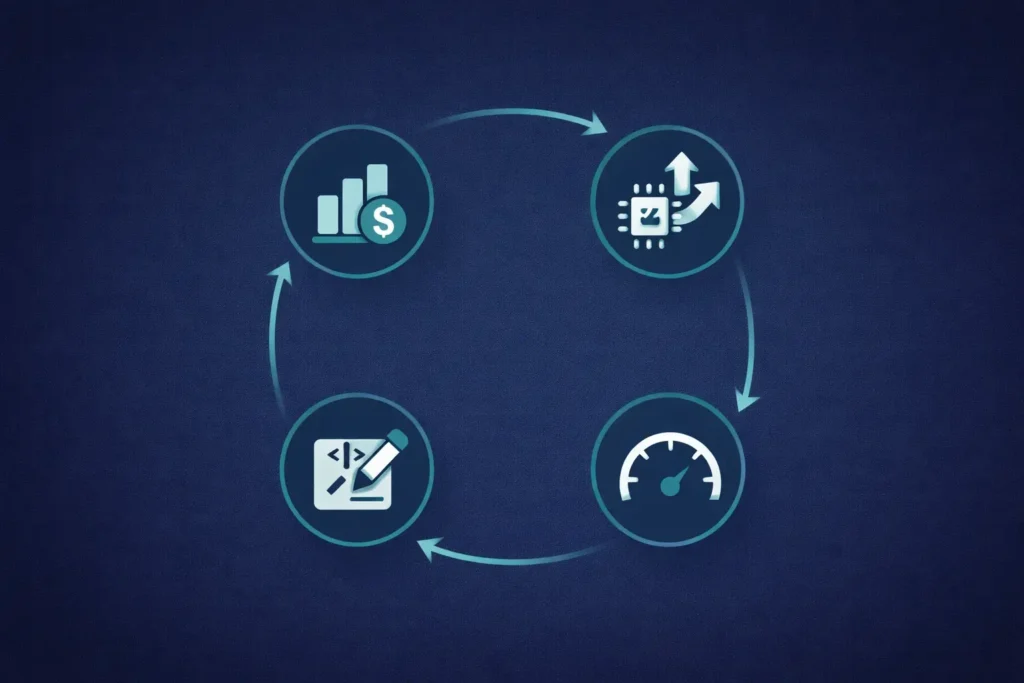
We conduct monthly reviews of your AI spending across all providers. This includes tracking token usage, identifying cost spikes, and implementing optimizations such as prompt caching, model downsizing for simple tasks, and batch processing. When costs rise unexpectedly, our alerting system notifies both our team and yours immediately. For a deeper look at cost strategies, see our guide on reducing AI costs.
Model Updates and Migration
AI providers release new model versions frequently. Some bring better performance at a lower cost. Others introduce breaking changes. We track these releases, test new versions against your specific use cases, validate output quality, and migrate when the upgrade delivers clear value. Nothing changes in production without thorough testing first.
Prompt Engineering Iteration
Prompts are not permanent. User behavior evolves, model capabilities change, and edge cases emerge over time. We regularly review prompt performance, refine instructions to improve accuracy, and reduce token usage where possible. Consequently, your AI features become more reliable and cost-effective with each iteration.
Performance Monitoring
We track the metrics that matter for AI features: response latency, output accuracy, error rates, and user satisfaction scores. These metrics feed into monthly reports that show exactly how your AI features are performing. If any metric drops below the agreed threshold, we investigate and resolve it proactively.
Security and Compliance Updates
AI providers regularly update their data handling policies, API terms, and security practices. We monitor these changes and ensure your implementation stays compliant. This includes reviewing data flows, updating API integrations when required, and documenting any changes that affect how user data is processed.
Why AI Maintenance Is Different
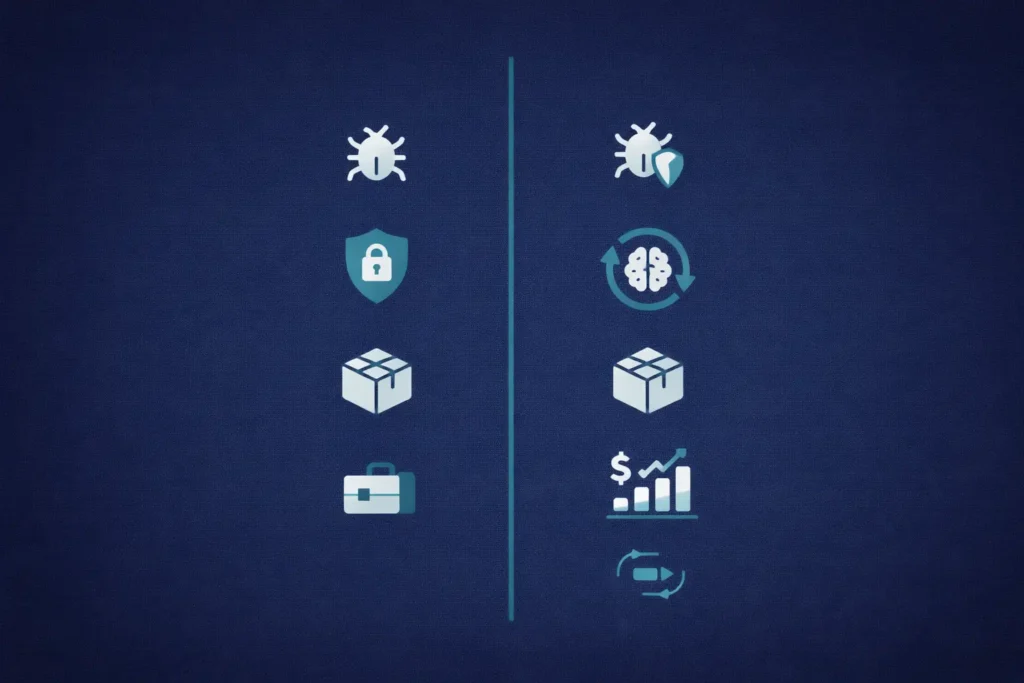
Traditional software maintenance focuses on fixing bugs, patching security vulnerabilities, and updating dependencies. These tasks follow predictable patterns. A PHP security patch arrives quarterly. A framework releases a new version annually. The timeline is manageable.
AI software maintenance includes all of the above — plus an entirely new layer of complexity. Models drift in behavior between versions. Costs shift as providers change pricing. Capabilities expand or contract when APIs update. Provider roadmaps change direction without warning.
Consider two practical examples. First, when a provider deprecates a model, every feature that depends on it needs to be migrated. This means testing alternatives, validating output quality, updating prompts, and deploying changes — all before the deprecation deadline. Without a maintenance plan, this becomes a fire drill.
Second, prompt-caching strategies that saved 60% in costs last quarter may need a complete redesign following an API change. The optimization work is never truly finished. Instead, it requires ongoing attention from engineers who understand both the software and the AI landscape.
The AI model landscape changes monthly. Someone needs to track it for your product. That is precisely what our maintenance service provides. For more context on how quickly this space evolves, read our AI model selection guide.
How AI Maintenance Extends Our Existing Service
AI maintenance is not a standalone offering. It extends Pegotec’s established support and maintenance service that has been running for years. Your existing SLA structure stays the same. Communication channels remain unchanged. The same engineering team that knows your codebase handles both traditional and AI-specific maintenance tasks.
What changes is the addition of an AI-specific monitoring and optimization layer. On top of regular software maintenance — server monitoring, dependency updates, bug fixes, and performance tuning — we add AI cost tracking, model version management, prompt performance analysis, and provider compliance monitoring.
This integrated approach means fewer handoffs and faster response times. When a model update affects application performance, the same team investigates both the AI layer and the application code. There is no gap between “the AI team” and “the development team” because they are one team.
For a broader perspective on why ongoing maintenance matters for software ROI, see our article on maximizing ROI through effective software maintenance.
Frequently Asked Questions
AI features require more frequent attention than traditional software. We recommend monthly cost reviews, quarterly model evaluations, and continuous performance monitoring. However, the exact schedule depends on your usage volume and the number of AI providers involved. High-traffic features may need weekly reviews, while lower-usage features can follow a monthly cycle. The key point is that AI maintenance is ongoing — not a one-time task after launch.
When a provider announces a model deprecation, we begin the migration process immediately. First, we identify all features that depend on the affected model. Then we evaluate alternative models — from the same provider or competitors — by testing them against your specific use cases. We validate output quality, measure cost differences, and update prompts as needed. Finally, we deploy the migration to production with monitoring in place. Because we track provider announcements continuously, we typically start this process well before the deprecation deadline.
Yes, we can. We start with a thorough audit of the existing AI implementation — reviewing the architecture, prompt design, model choices, cost structure, and integration patterns. This audit identifies any immediate issues and establishes a baseline for ongoing maintenance. From there, we integrate the AI features into our standard maintenance workflow. We have taken over AI implementations built on various stacks and providers. The audit phase typically takes one to two weeks, depending on complexity.
Get Started with AI Maintenance
If your software already includes AI features — or you are about to launch them — maintenance planning should start now. Not after something breaks. Contact Pegotec to discuss how we can keep your AI features efficient, cost-effective, and up to date.