
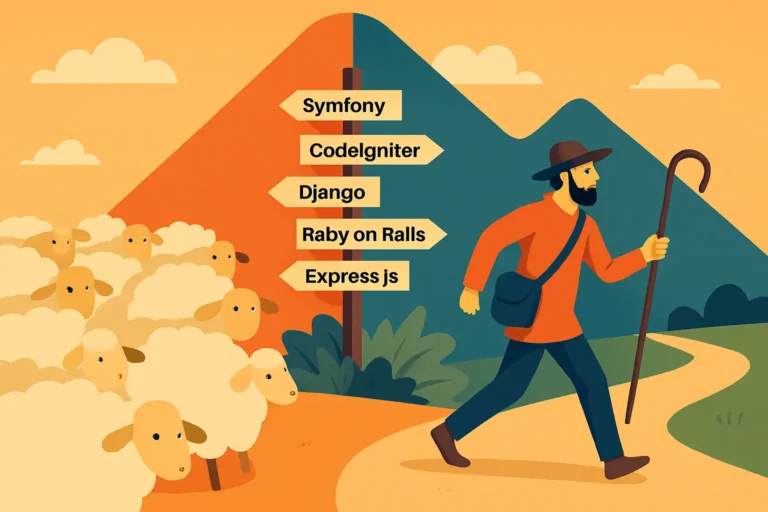
Laravel has become a household name in web development. Known for its elegance and ease of use, it powers countless applications across the internet. However, just because it’s popular doesn’t mean it’s the only—or always the best—option. If you are exploring new possibilities, you’re not alone. Many companies and developers are looking beyond Laravel to frameworks that better fit their specific goals. At Pegotec, we help businesses find the ideal tech stack for every project. In this article, we dive into some strong Laravel alternatives and how Pegotec can guide you in choosing the right one.
“The best tool is the one that solves your problem, not the one that’s most popular.”
Martin Fowler, Software Development Thought Leader
Why Consider Alternatives to Laravel?
Laravel is excellent, but it might not be perfect for every use case. For projects that demand faster performance, smaller footprints, or non-PHP environments, a different framework might be a better choice. Exploring Laravel alternatives means staying flexible and finding tools that align with your business needs. Pegotec evaluates each framework based on your goals, timeline, and scalability needs.
Symfony: Structure and Stability for Complex Projects
Symfony is a solid choice if you are looking for a well-structured and modular PHP framework. It offers reusable components and supports microservice architecture very well. Symfony excels in projects where long-term maintainability and scalability are crucial, providing excellent alternatives to Laravel.
Pegotec often recommends Symfony for enterprise-level applications or multi-user platforms. With its strong community and extensive documentation, development teams can build secure and efficient systems with confidence.
CodeIgniter: Speed Without the Bulk
Sometimes, you don’t need all the bells and whistles. CodeIgniter is ideal when you want a lightweight solution that is easy to deploy and maintain. It’s known for its small footprint and fast performance, making it a favorite for small to medium-sized projects and earning it a spot among viable Laravel alternatives.
Pegotec utilizes CodeIgniter when clients require fast delivery without compromising on quality. This framework’s simplicity helps us maintain a lean approach while still building robust and secure applications.
Django: A Python-Powered Workhorse
When your team prefers Python, Django is a top contender for your development needs. This high-level web framework encourages rapid development and clean code. It comes with a built-in admin interface, a powerful ORM, and security and authentication tools, making it a potential alternative to Laravel.
Pegotec often suggests Django for data-driven applications, dashboards, and startups. It’s an excellent fit for platforms that require user management, data visualization, or content workflows. Plus, Python’s popularity in AI and data science opens up exciting integration possibilities.
Ruby on Rails: Convention That Accelerates Development
Ruby on Rails is known for its opinionated structure. That may sound limiting, but it significantly speeds up development. With “convention over configuration” at its core, Rails makes it easy to launch new apps and serves as an alternative to Laravel.
Pegotec works with clients who need MVPs built fast. Rails is often the tool of choice in these cases, especially for early-stage startups looking to quickly validate their idea with real users.
Express.js: Lightweight and API-Ready
If your application runs on JavaScript or you’re building a headless setup, Express.js might be the right choice. It’s a fast, unopinionated framework for Node.js that works exceptionally well for REST APIs and SPAs. It stands as a notable alternative to Laravel in terms of API readiness.
Pegotec frequently recommends Express.js for projects that require real-time features or microservice architecture. It also integrates well with modern front-end frameworks like React and Vue.js. This makes it perfect for dynamic, user-facing applications.
More Than Frameworks: How Pegotec Adds Value
Choosing the proper framework is just the beginning. Pegotec guides clients through the full lifecycle of development—from strategy and planning to deployment and support. Here’s how we help:
- Consulting: Assess your technical and business needs to recommend the optimal technology stack. We help find the right Laravel alternative if required.
- Custom Development: Whether it’s Symfony, Django, or Express.js, our team builds high-performance applications tailored to your goals.
- API and Microservice Design: Many alternatives shine in decoupled architectures, sometimes better than Laravel. We design scalable APIs and microservices that power your app’s ecosystem.
- Cloud and DevOps: We support seamless deployment using Docker, CI/CD pipelines, and cloud-native environments.
- Long-Term Support: Pegotec doesn’t just deliver code. We provide ongoing support, performance monitoring, and regular updates to ensure optimal performance.
The Future Is Flexible
In a fast-moving digital world, flexibility is power. Laravel may still be the right tool in many cases, but it’s not the only one. Exploring Laravel alternatives can open doors to better performance, more scalable architectures, or simpler deployments. At Pegotec, we believe in using the right tool for the job. Whether that means Laravel or something else, we’re here to help you make the best decision.
So, if you’re ready to break away from the herd, talk to us. Let’s build something better, together. Contact us to explore alternatives to Laravel for your software development project.
Frequently Asked Questions About Laravel Alternatives
While Laravel is a powerful and popular PHP framework, it may not be the best fit for every project. Alternatives may offer faster performance, smaller footprints, or better compatibility with non-PHP environments.
Symfony is a modular PHP framework ideal for large, complex projects that require long-term stability and scalability. Pegotec often recommends it for enterprise applications and multi-user platforms.
Yes, in many cases. CodeIgniter has a smaller footprint and minimal configuration, which makes it faster to set up and run—especially for small to medium-sized projects.
Django is an excellent choice for Python-based projects, particularly those that are data-driven or require AI and data science integrations. It’s well-suited for dashboards, content workflows, and user management systems.
Ruby on Rails is ideal for MVPs and startup projects where speed to market is essential. Its “convention over configuration” approach helps launch applications quickly.
Express.js is ideal for Node.js applications, especially for building REST APIs, SPAs, and real-time features. It also integrates well with modern JavaScript frameworks like React and Vue.js.
Absolutely. Pegotec evaluates your project’s goals, technology preferences, and scalability requirements to recommend the most suitable framework—whether that’s Laravel or an alternative like Symfony, Django, or Express.js.
Yes. Pegotec offers ongoing maintenance, updates, performance monitoring, and cloud deployment support for all the frameworks we work with.
Let's Talk About Your Project
Enjoyed reading about Exploring Alternatives to Laravel for Software Development? Book a free 30-minute call with our consultants to discuss your project. No obligation.