
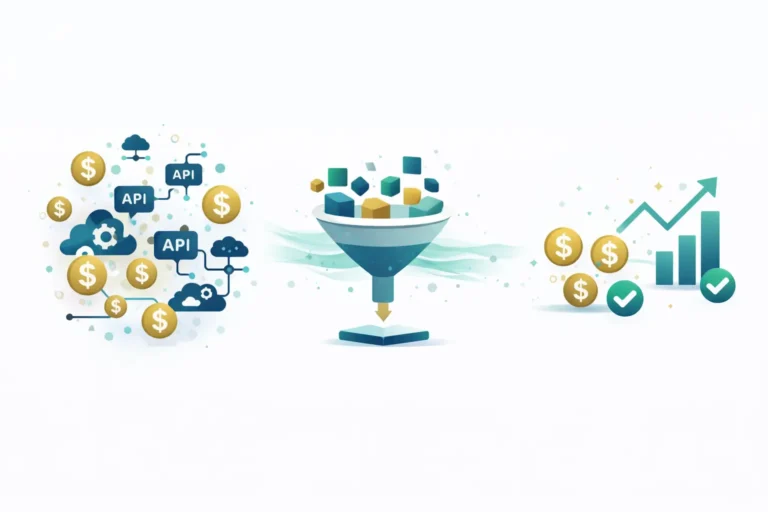
Artificial intelligence transforms what businesses can achieve. Customer service chatbots handle inquiries around the clock. Content generation accelerates marketing output. Data analysis reveals insights that drive decisions. However, AI capabilities come with high costs that can quickly exceed projections. Therefore, reducing AI costs has become essential knowledge for technology leaders aiming to manage budgets effectively.
At Pegotec, we help businesses implement AI solutions that deliver results without runaway expenses. Our optimization strategies typically reduce AI operational costs by 40-70% while maintaining full functionality. This guide explains what drives AI costs and what strategic decisions can control them.
Why AI Costs Escalate Unexpectedly
AI services like OpenAI’s GPT-5, Anthropic’s Claude, and Google’s Gemini charge based on usage. Unlike traditional software subscriptions with fixed monthly fees, AI costs scale directly with how much you use the service. Each interaction consumes “tokens” – the pricing unit for AI APIs.
This usage-based model creates budgeting challenges. A customer service chatbot handling 1,000 daily conversations might cost $500 per month. Scale to 10,000 conversations, and costs reach $5,000. Add features like conversation history or document analysis, and costs multiply further.
Many businesses discover this dynamic only after receiving unexpected invoices. Initial pilots with modest usage suggest affordable costs. Production deployment at scale reveals the actual expense. Without optimization, AI costs can exceed the combined costs of hosting, development, and maintenance.
The Three Pillars of AI Cost Optimization
Reducing AI costs does not require reducing AI capabilities. Strategic optimization targets waste and inefficiency while preserving the functionality your business needs. Several proven approaches deliver the most significant savings.
Intelligent Response Caching
Many AI interactions are repetitive. Customers ask similar questions. Products need identical descriptions. Support requests follow common patterns. Without optimization, each repetitive request incurs the full cost of AI processing.
Intelligent caching stores AI responses and reuses them for similar requests. When a customer asks, “What are your business hours?” the system returns a cached reaction instead of querying the AI again. The first request pays full cost; subsequent similar requests cost nothing.
The results speak for themselves: caching typically reduces AI API calls by 60-80% in customer-facing applications. A chatbot handling 10,000 monthly conversations might only require 2,000-4,000 actual AI queries, with the remainder served from cached responses.
Strategic AI Model Selection
Not all AI tasks require the most powerful – and expensive – models. Premium models like GPT-5 or Claude Opus cost 5-10 times as much as efficient models like o4-mini or Claude Haiku within the same provider. Ultra-low-cost options like DeepSeek can extend that gap to 50-100 times. Using premium models for simple tasks wastes budget.
Innovative systems route requests to appropriate models based on complexity. Simple classification tasks use inexpensive models. Complex reasoning tasks use premium models. This matching ensures you pay for capability only when needed.
Model selection optimization typically reduces costs by 30-50% compared to using a single premium model for all tasks. Response quality remains high because complex requests continue to receive sufficient processing power.
Prompt and Context Optimization
AI costs depend on both input size and output. Every word sent to an AI API costs money. Verbose instructions, unnecessary context, and inefficient formatting inflate costs without improving results.
Optimized prompts achieve the same results with fewer words. System instructions that accompany every request deserve particular attention – reducing these instructions by half cuts a significant recurring expense. Context management ensures only relevant information accompanies each request.
These refinements typically reduce per-request costs by 20-40% while maintaining or improving output quality.
Provider-Level Prompt Caching and Batch Processing
All major AI providers now offer two additional cost-saving features worth leveraging. Prompt caching automatically stores repeated system prompts and common prefixes, saving up to 90% on cached tokens with zero application code changes. If your application sends the same system instructions with every request, prompt caching delivers immediate savings.
Batch processing endpoints allow non-real-time requests to be submitted in bulk at a 50% discount. Tasks like nightly report generation, bulk content processing, or background analysis are ideal candidates. Combined with the three pillars above, these provider-level features can push total savings well beyond 70%.
The Business Case for AI Optimization
Investment in AI cost optimization delivers compelling returns. Consider a business spending $5,000 monthly on AI services. Applying the strategies above might reduce monthly costs to $1,500-2,000 – a savings of $36,000-42,000 annually.
Optimization projects typically require 2-4 weeks of development effort. For most businesses, the investment pays for itself within the first month. Ongoing savings compound as AI usage grows, since optimized systems scale more cost-effectively than unoptimized ones.
Beyond direct savings, optimization provides strategic benefits:
- Predictable budgeting: Optimized systems behave more consistently, enabling accurate cost forecasting
- Scalability confidence: Growth does not trigger proportional cost increases
- Feature enablement: Budget freed from waste funds, new AI capabilities
- Competitive positioning: Lower operational costs support competitive pricing
Questions to Ask Your Development Team
Whether you have an internal team or work with a development partner, these questions reveal optimization opportunities:
Are we caching AI responses? If not, you are likely paying for the same queries repeatedly. Any application with repetitive interactions should implement caching.
Are we using appropriate models for each task? If every request goes to the most expensive model, significant savings exist. Simple tasks should use efficient models.
What is our cache hit rate? This metric shows the percentage of requests served from cache versus those requiring new AI queries. Higher rates indicate better optimization.
Have we optimized our prompts? Initial prompts often contain unnecessary verbosity. Prompt optimization is straightforward and delivers immediate savings.
Do we have cost monitoring in place? Without visibility into AI spending patterns, optimization opportunities remain hidden. Detailed monitoring reveals where costs accumulate.
When to Prioritize AI Cost Optimization
Not every business needs immediate optimization attention. Consider prioritizing if:
- Monthly AI costs exceed $500 and are growing
- AI usage is scaling faster than anticipated
- Cost unpredictability creates budgeting challenges
- AI features are being limited due to cost concerns
- Competitors appear to offer similar AI features at lower prices
Early-stage applications with modest usage may not yet justify optimization investment. However, building optimization into new applications from the start costs less than retrofitting it later.
Real-World Results
Our clients have achieved significant results through these strategies. A customer service platform in Laravel reduced monthly AI expenses from $4,200 to $1,100 while handling 40% more conversations—a content generation application cut costs by 65% through intelligent caching and model routing. An e-commerce recommendation system reduced per-user AI costs by 55% while improving recommendation quality.
These results reflect typical outcomes, not exceptional cases. Most applications contain substantial optimization opportunities that deliver measurable returns within weeks of implementation.
How Pegotec Helps Businesses Reduce LLM Costs
Our approach combines technical expertise with business understanding. We begin with a cost audit that identifies current spending patterns and optimization opportunities. We quantify potential savings before any development starts, ensuring clear ROI expectations.
Implementation focuses on high-impact changes first. We prioritize optimizations that deliver the most significant savings with the least disruption to existing functionality. Most businesses see measurable cost reductions within the first month.
For new AI implementations, we build optimization into the architecture from the start. This approach costs less than retrofitting and keeps costs under control as usage scales. Our development methodology considers token economics alongside functional requirements.
Conclusion
AI capabilities should drive business value, not drain budgets. Strategic optimization lets you leverage AI power while maintaining sustainable, predictable costs. The businesses that master AI cost management will outcompete those that let expenses run unchecked.
Concerned about your AI costs or planning an AI-powered initiative? Contact Pegotec for a cost assessment. We will identify your optimization opportunities and quantify the potential savings before any commitment.
FAQ Section About Reducing AI Costs
Most businesses achieve 40-70% cost reduction through intelligent caching, strategic model selection, and prompt optimization. The exact savings depend on current usage patterns, with applications that handle repetitive queries seeing the most significant improvements.
Properly implemented optimization maintains or improves quality. Caching delivers instant responses. Model routing ensures complex tasks receive appropriate processing power—optimization targets waste, not capability.
Basic optimization for existing applications typically requires 2-4 weeks. New applications can include optimization from the start during normal development. The investment typically pays for itself within the first month of reduced costs.
Businesses spending $500 or more monthly on AI APIs typically see meaningful returns from optimization. Smaller applications may not yet justify the investment, though building optimization into new applications costs less than retrofitting.
Teams with AI development experience can implement many optimizations internally. External expertise adds value through experience with optimization patterns, faster implementation, and knowledge of pitfalls to avoid. A hybrid approach often works best.
Let's Talk About Your Project
Enjoyed reading about Reducing AI Costs Without Reducing AI Power: A Strategic Guide for Decision Makers? Book a free 30-minute call with our consultants to discuss your project. No obligation.