
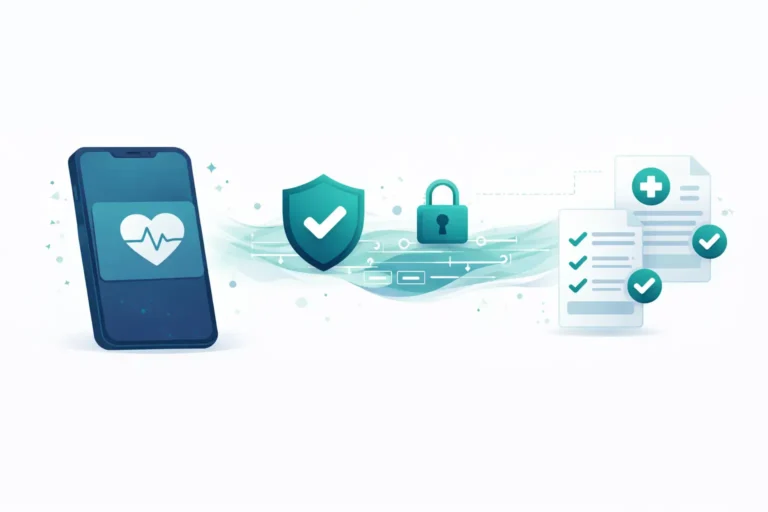
Healthcare applications handle the most sensitive personal information imaginable. Patient records, treatment histories, and diagnostic data require protection beyond standard security practices. Healthcare app development demands understanding regulations, implementing robust encryption, and building systems that earn user trust through demonstrated security.
Pegotec has built healthcare applications for clients across Southeast Asia. Each project taught us that compliance requirements shape every technical decision from architecture to deployment. Here is what we have learned about developing healthcare apps that meet regulatory standards while delivering excellent user experiences.
Understanding Healthcare App Development Regulations
Healthcare apps operate under stricter regulations than typical consumer applications. These rules exist to protect patients from data breaches that could compromise their privacy and safety. Understanding applicable regulations is foundational to any healthcare project.
HIPAA in the United States sets the global benchmark for healthcare data protection. Even apps operating outside America often adopt HIPAA standards because they represent industry best practices. The regulation covers how applications store, transmit, and access protected health information.
Additionally, regional regulations add specific requirements. Singapore’s PDPA governs personal data protection with healthcare-specific provisions. The Philippines has its Data Privacy Act. Each jurisdiction where your app operates may impose additional obligations. Mapping these requirements early prevents costly redesigns later.
Moreover, app store policies impose their own healthcare standards. Apple and Google scrutinize health apps more carefully than other categories. Apps making health claims must demonstrate accuracy. Apps accessing sensitive health data must clearly justify that access.
Data Encryption Requirements for Healthcare Apps
Encryption protects patient data both in storage and during transmission. Healthcare regulations typically mandate specific encryption standards rather than leaving implementation to the developer’s discretion.
Transport Layer Security protects data moving between devices and servers. Healthcare apps should enforce TLS 1.3 or higher for all network communications. Certificate pinning adds another layer by preventing man-in-the-middle attacks even if device security is compromised.
Furthermore, data at rest requires equally strong protection. AES-256 encryption represents the current standard for stored healthcare data. This applies to local device storage, server databases, and backup systems. Encryption keys require secure management separate from the encrypted data itself.
End-to-end encryption becomes necessary when patients communicate with healthcare providers through your app. Messages, images, and documents shared between parties should remain unreadable to anyone except the intended recipients, including your own servers.
Authentication and Access Control in Healthcare App Development
Verifying user identity prevents unauthorized access to sensitive records. Healthcare apps require authentication stronger than typical consumer applications while remaining accessible to users with varying technical abilities.
Multi-factor authentication should be mandatory for healthcare professionals accessing patient records. Something the user knows combined with something they have provides reasonable security. Biometric options like fingerprint or facial recognition offer convenience without sacrificing protection.
Consequently, role-based access control limits what different users can see and do. Doctors need different permissions than nurses. Patients should access their own records but not others. Administrative staff may need billing information without clinical details. Properly designed access control prevents both external breaches and internal misuse.
Session management deserves careful attention in healthcare contexts. Automatic timeouts should log users out after periods of inactivity. Devices should not store credentials that could be extracted if lost or stolen. These controls frustrate attackers who gain temporary access to authorized devices.
Audit Trails and Compliance Documentation
Healthcare regulations require demonstrating compliance, not just achieving it. Audit trails record who accessed what data and when. This logging enables investigation of potential breaches and proves appropriate data handling during audits.
Comprehensive logging captures every access to protected health information. The log should include user identity, timestamp, action performed, and data accessed. Logs themselves require protection from tampering to maintain their evidentiary value.
Additionally, regular compliance audits verify that security controls function as designed. Penetration testing reveals vulnerabilities before attackers find them. Security assessments should occur both during development and after deployment. Many healthcare organizations require vendors to provide audit reports before integration.
Documentation extends beyond technical logging to policies and procedures. How do you handle data breach notifications? What is your incident response process? How do you train staff on privacy obligations? Written policies demonstrate organizational commitment to compliance.
Third-Party Integrations and Healthcare Systems
Healthcare apps rarely operate in isolation. Integration with electronic health records, laboratory systems, and billing platforms creates additional security considerations. Each integration point represents a potential vulnerability.
HL7 FHIR has emerged as the standard for healthcare data exchange. This modern API specification enables interoperability while maintaining security standards. Apps integrating with major healthcare systems increasingly require FHIR compliance.
Furthermore, vendor agreements must address data protection responsibilities. When patient data flows between your app and external systems, clarity about security obligations prevents gaps. Business associate agreements formalize these relationships under HIPAA and similar regulations.
Cloud hosting introduces additional considerations. Major providers offer healthcare-specific configurations that meet regulatory requirements. However, configuration remains your responsibility. Default cloud settings rarely satisfy healthcare compliance without modification.
User Experience Within Security Constraints
Security measures that frustrate users are often circumvented. Healthcare applications must balance protection with usability, primarily when serving patients who may be older adults, under stress, or unfamiliar with digital technology.
Progressive security adapts protection levels to context. Viewing appointment reminders might require less authentication than accessing test results. This risk-based approach maintains security for sensitive operations while streamlining routine tasks.
Clear communication helps users understand why security measures exist. Patients who understand that authentication protects their health information are more willing to comply. Transparent security builds trust rather than erecting barriers.
How Pegotec Approaches Healthcare App Development
Our healthcare app development process begins with regulatory mapping. We identify applicable requirements before writing code, ensuring compliance influences architecture rather than becoming an afterthought. This approach prevents the expensive rework that occurs when security gaps emerge late in development.
Pegotec implements security-by-design principles throughout development. Threat modeling identifies potential vulnerabilities early. Security testing occurs continuously rather than only before launch. Our development team receives ongoing training on healthcare-specific security practices.
Nine years of software development taught us that healthcare projects require extra diligence. Patient trust depends on demonstrated security. Regulatory compliance protects both users and the organizations serving them. We help clients navigate these requirements while building applications that genuinely improve healthcare delivery.
Conclusion
Healthcare app development requires attention to compliance and security beyond that of typical applications. Understand applicable regulations before starting development. Implement encryption that meets industry standards. Build authentication and access controls that balance security with usability. Maintain audit trails that demonstrate ongoing compliance.
Planning a healthcare application? Contact Pegotec to discuss how our compliance expertise and security practices can help you build an app that protects patient data while delivering excellent user experiences.
FAQ Section About Healthcare App Development
HIPAA sets standards for protecting patient health information in the United States. Compliant apps must implement specific security controls, encryption requirements, and audit procedures. Even apps operating outside America often adopt HIPAA standards as industry best practices.
Yes. Healthcare apps must encrypt data both in transit and at rest using industry-standard algorithms like AES-256 and TLS 1.3. Encryption keys require secure management separate from encrypted data. End-to-end encryption protects communications between patients and providers.
Healthcare apps typically require longer development timelines than standard applications due to compliance requirements, security testing, and regulatory documentation. A moderately complex healthcare app often takes six to twelve months from planning to launch.
Yes, but cloud configurations must meet healthcare compliance requirements. Major providers offer healthcare-specific services, but proper configuration remains your responsibility. Business associate agreements may be required with cloud vendors.
While no universal certification exists, reputable healthcare app developers should demonstrate knowledge of HIPAA, regional privacy laws, and healthcare interoperability standards like HL7 FHIR. Security certifications and compliance audit experience indicate appropriate expertise.
Let's Talk About Your Project
Enjoyed reading about Building Healthcare Apps: Compliance and Security Considerations? Book a free 30-minute call with our consultants to discuss your project. No obligation.