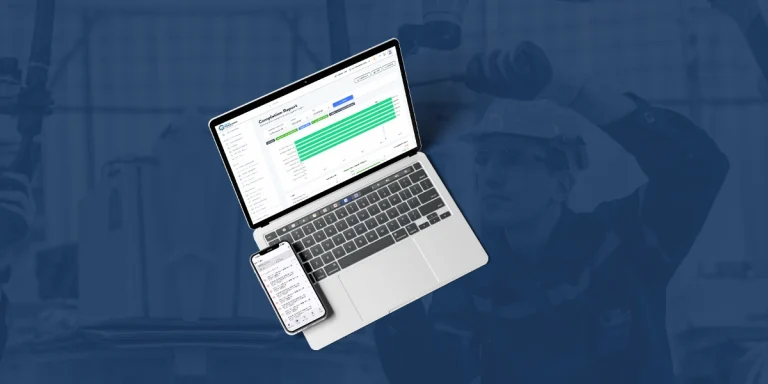
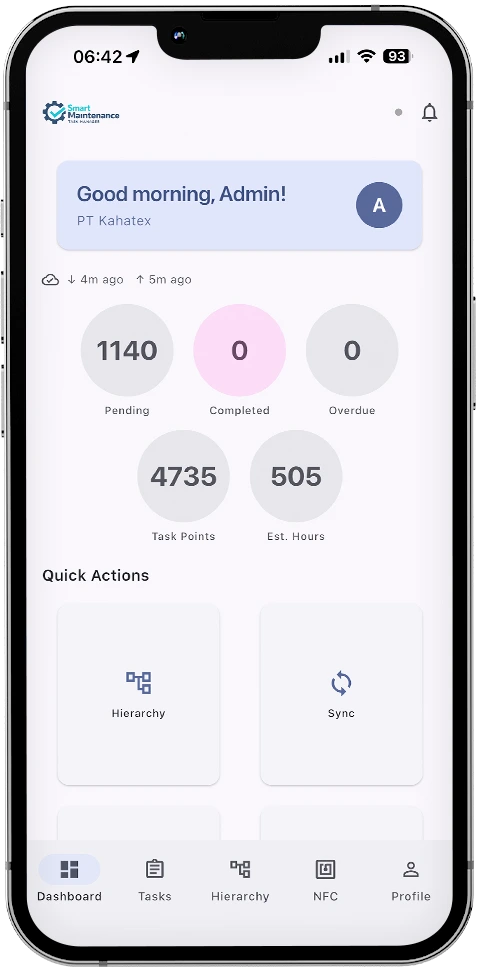
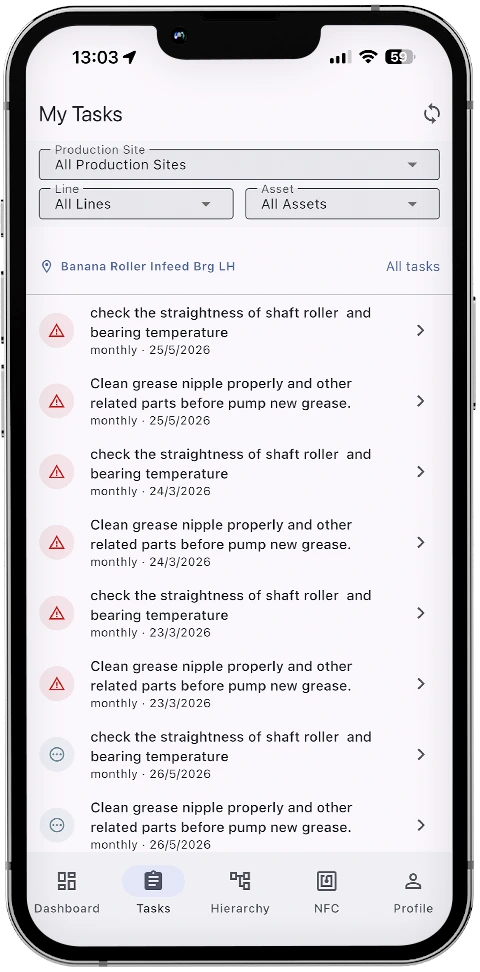
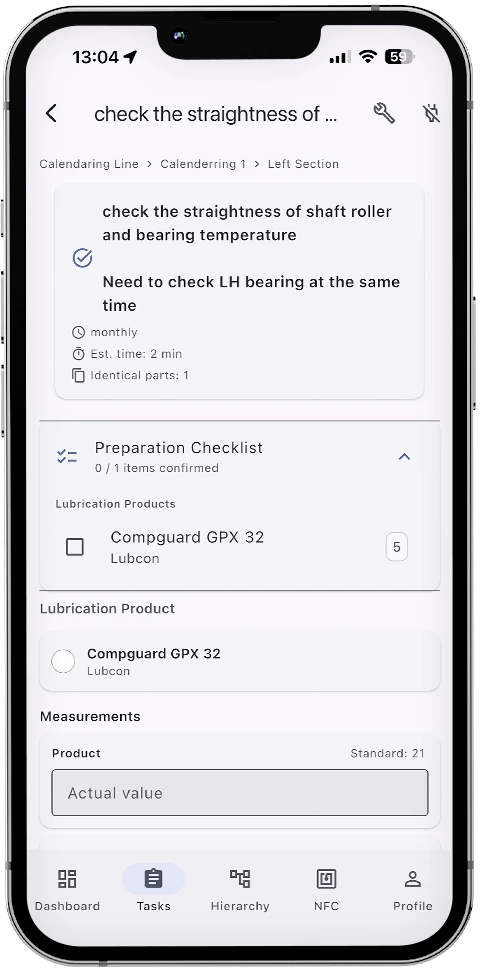
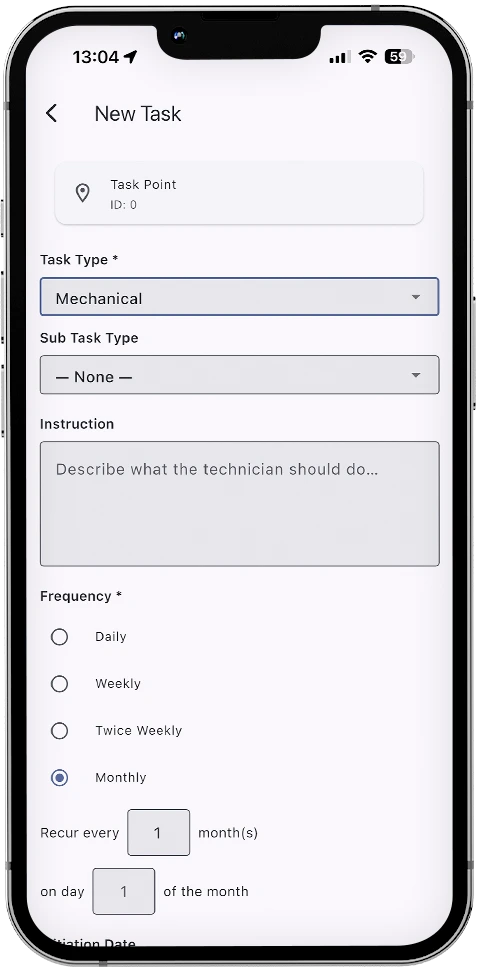
Smart Maintenance Task Manager: A Mobile-First CMMS for the Factory Floor
Pegotec launches an industrial CMMS built for the maintenance team, not the IT department.
Industrial maintenance is one of the highest hidden costs in manufacturing. Moreover, repairing a broken machine costs far more than preventing the failure. However, most factories still run maintenance on paper forms, whiteboards, and spreadsheets. Tasks get missed, machines wear out faster, and production stops at the worst possible moment.
Pegotec built Smart Maintenance Task Manager to close that gap. The product is a cloud-based Computerized Maintenance Management System (CMMS) built for industrial operations — manufacturing, food and beverage, textiles and garment, chemical processing, automotive, pharmaceutical, and mining. Furthermore, it was designed from the ground up around the reality of the factory floor, not the comfort of a corporate desk.
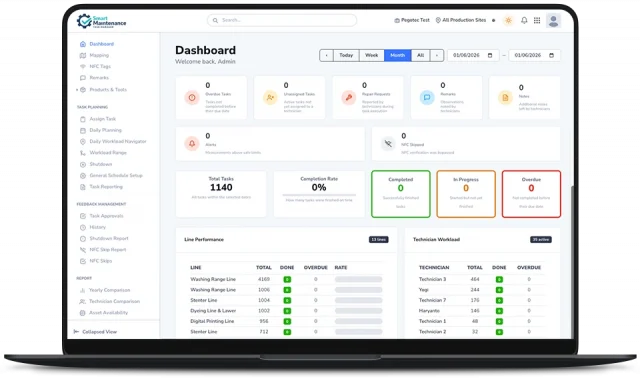
The platform has been live since mid-2026. It runs on a web dashboard for managers and a native mobile app for technicians on iOS and Android.
Understanding the Challenge
Industrial maintenance teams face a stack of problems that generic productivity tools never solve. First, enterprise asset management platforms are expensive and built for plant managers who have a laptop on their desk all day. They rarely fit a multi-site mid-market operation, and they rarely reach the technician on the floor.
Second, spreadsheets and paper logs fall apart at scale. How does a manager know whether a lubrication check on Line 4 was actually completed? Paper forms get lost. Spreadsheets are outdated by the time they reach the office. As a result, real-time visibility disappears, and management is always one incident behind the floor’s actual state.
Third, mobile tools assume always-on connectivity. Factory floors, basements, and remote production areas often have no usable signal. Most maintenance apps fail there. As a result, technicians revert to paper, and the central system loses track of what happened.
Fourth, safety procedures live in a separate binder from the task list. A technician can start work on a machine that requires lockout/tagout with nothing at the point of work to prompt the procedure. The audit trail is thin or non-existent.
Smart Maintenance Task Manager addresses all four problems directly, and the design reflects each one.
A Mobile-First Solution for the Factory Floor
The product rests on four deliberate design choices.
First, it is mobile-first. Technicians work on smartphones and tablets, not on desktop browsers, because that matches where the work actually happens. Managers still get a full web dashboard, but the mobile experience is the center of gravity.
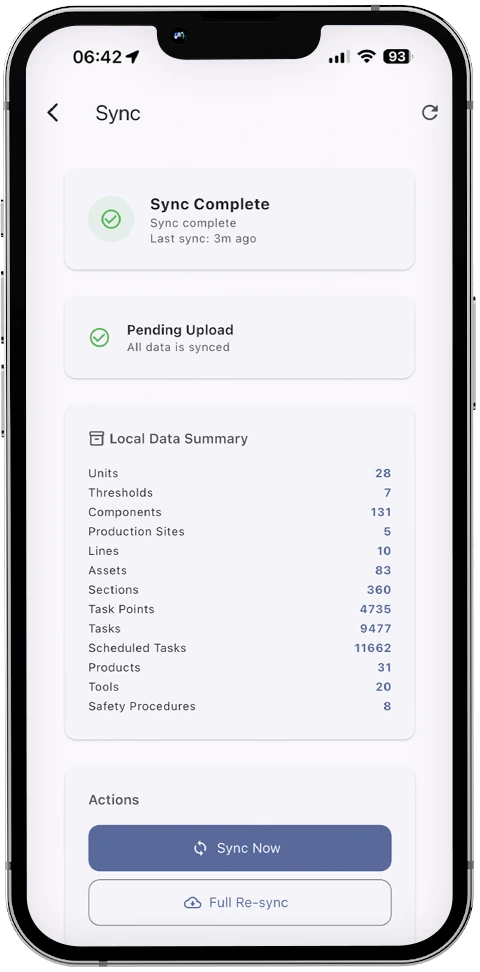
Second, the maintenance app for technicians is offline-first. Technicians can complete tasks, record readings, scan tags, and take photos with no internet connection. Meanwhile, the phone queues every action. When the device reconnects — minutes or hours later — everything syncs automatically. As a result, the workflow never stalls.
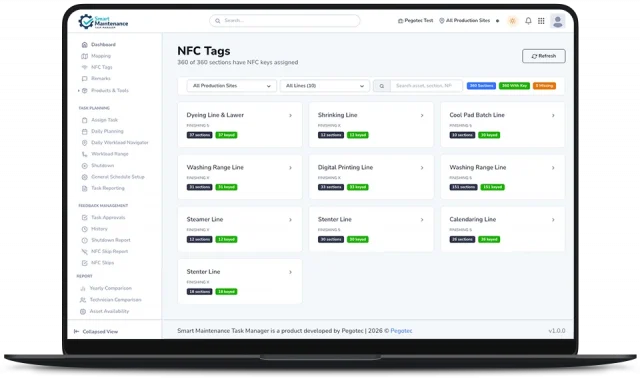
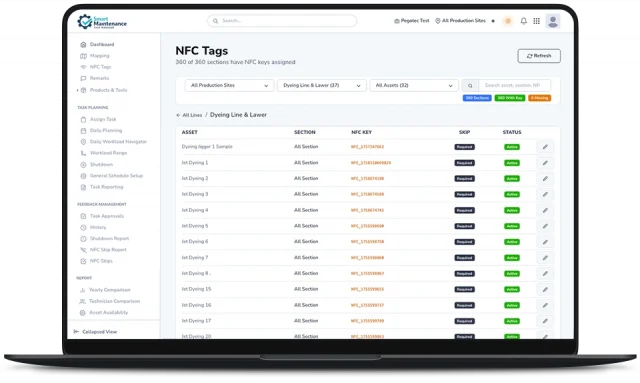
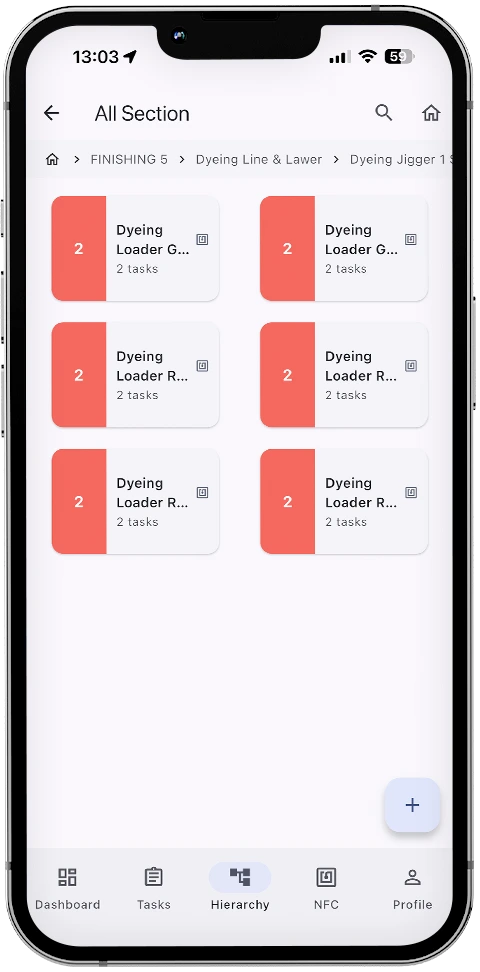
Third, the platform supports a five-level asset hierarchy: Production Site → Line → Asset → Section → Task Point. In addition, maintenance teams attach NFC tags to machines, sections, or task points. A technician scans the tag, opens the right task, and starts work in seconds. The hierarchy remains flexible enough to accommodate any factory layout without forcing every site into a single template.
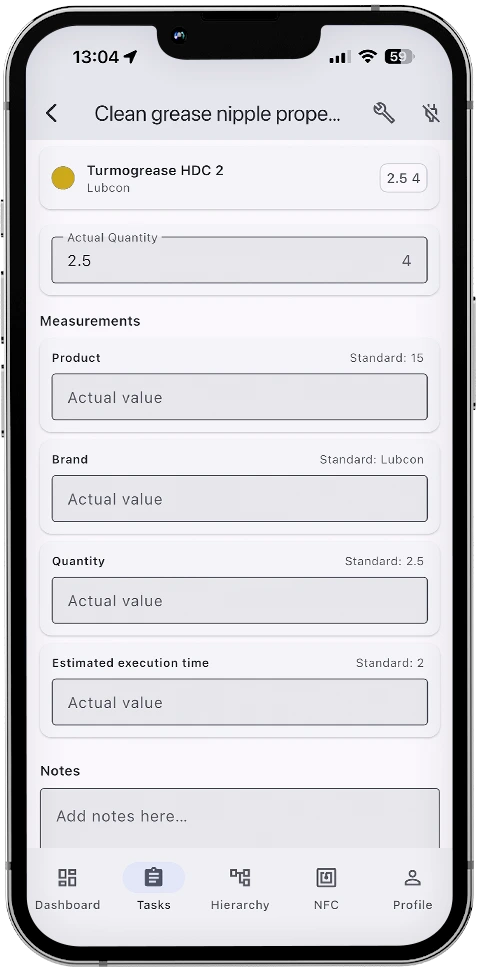
Fourth, safety reminders are built into the workflow, not bolted on. A daily safety checklist opens each technician’s day. In addition, task points marked lockout-required open with a full-screen lock-out/tag-out reminder that the technician confirms to continue. These are prompts on the phone, not stored records, so sites keep their LOTO and permit records in their existing system. However, the platform records every completed task with who did it, when, any readings taken, and photos where required. That task history exports to CSV.
Building a Platform That Works on the Floor
Pegotec built Smart Maintenance Task Manager on a modern, well-supported technology stack chosen for long-term operability. The web dashboard runs on React with the Phoenix admin framework. Flutter powers the mobile app from a single codebase for both iOS and Android.
The backend is a Laravel API designed around multi-tenant SaaS from day one. Tenant-scoped access controls protect every customer’s data, enforced in the application layer, not just in the user interface. A separate Laravel-based monitoring hub gives the Pegotec operations team a single pane of glass across all production deployments.
Live updates flow over WebSockets, so the dashboard reflects the floor in real time. Meanwhile, the mobile app syncs in the background about every 15 minutes on Android and as often as iOS allows. Technicians can also sync on demand at any time. NFC tag scanning works even when the device is fully offline.
Crucially, the system speaks the languages the technicians do. Specifically, the app and the web dashboard come in 14 languages — including Arabic, Bengali, Chinese (Simplified), Indonesian, Spanish, Thai, and Turkish. Each technician chooses the language on their own phone, so a multinational operation can deploy a single platform across every site.
Empowering Maintenance Teams Through Onboarding
Technology alone cannot change how a maintenance team operates. So Pegotec built onboarding around the reality that most maintenance technicians don’t have time for week-long training programs.
The mobile-first interface keeps the training overhead deliberately low. A technician opens the app, scans an NFC tag, and the system shows the right task. Overall, setup typically takes about 2–3 weeks for a site with around 100 assets. That covers the asset hierarchy, the maintenance schedules, and onboarding the technician team onto the mobile app.
For deeper onboarding, the product ships with a complete end-user handbook produced as both an interactive website and a printable PDF. The handbook covers every role — technician, supervisor, manager, administrator — and every workflow. The app also guides technicians through each task’s form, so new technicians learn the system by using it rather than reading a manual.
Ensuring Quality Through Testing
Pegotec verified the platform at every layer before launch. Automated tests cover the API contract on every release. The frontend has its own test suite for the components that drive critical workflows. Mobile and web integration tests exercise the full task-execution path. Furthermore, the platform’s API contract is published as OpenAPI and enforced automatically — a frontend or mobile client that drifts from the contract fails the automated build before it reaches production. The discipline matches the operational reliability that industrial maintenance teams require.
Launch State and What’s Next
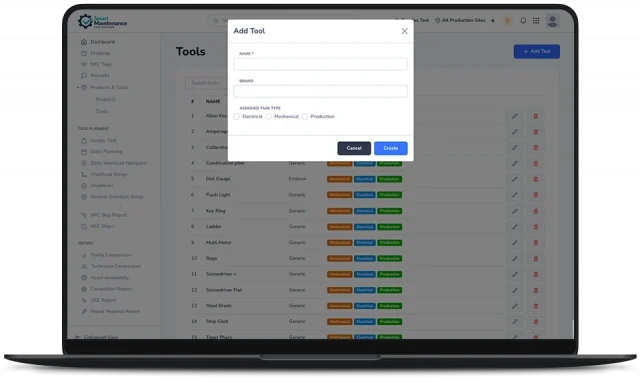
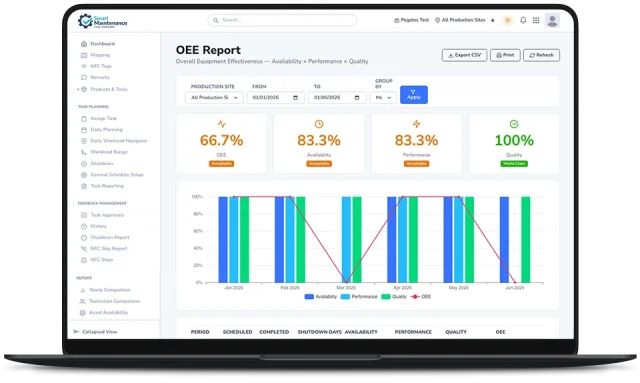
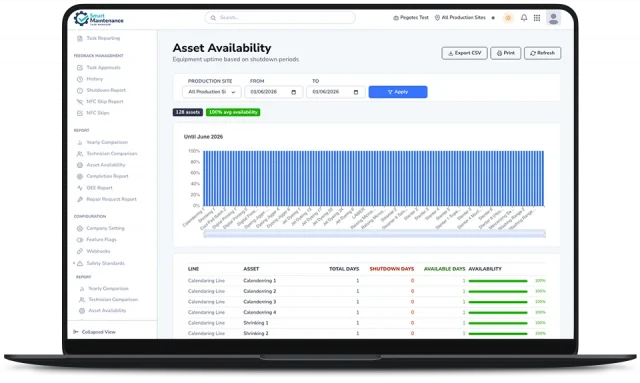
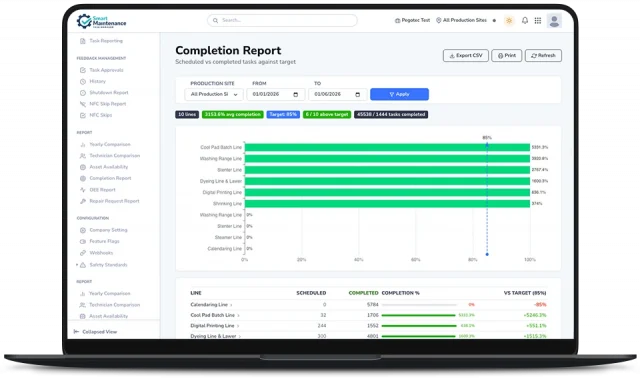
Smart Maintenance Task Manager has been live since mid-2026. Specifically, the platform offers two role-specific experiences: a manager-facing web dashboard and a native technician mobile app for iOS and Android. Multi-tenant infrastructure backs both, and one account can run a single site or several.
The product serves seven industries: manufacturing, food and beverage, textiles and garment, chemical processing, automotive, pharmaceutical, and mining. Each sector faces the same core maintenance challenge: high downtime cost, distributed equipment, and safety-critical work. Each benefits from the same combination — offline mobile execution, structured task scheduling, and centralized oversight.
Notably, every subscription includes the full platform, and Inventory is the one optional module. However, shift planning and outbound webhooks are available on request. Finally, pricing is a custom quote based on users, sites, asset scale, and mobile devices. We update this entry as the product develops.
How Pegotec Can Help Industrial Operations
Pegotec brings two complementary options to industrial maintenance buyers. The first is Smart Maintenance Task Manager itself — a turnkey SaaS subscription that fits common maintenance workflows without custom development. For factories whose operations match the platform’s defaults, this is the fastest route from spreadsheet chaos to a working CMMS.
The second option is custom industrial software development. Some operations have workflow demands that fall outside any off-the-shelf CMMS — bespoke equipment, regulated processes, and integrations with proprietary control systems. In those cases, Pegotec brings years of industrial-grade engineering experience and the discipline of running our own production SaaS to designing custom maintenance platforms.
In both cases, the engagement starts with a scoped assessment of how a maintenance operation actually runs today. We map the workflow, identify the gaps that hurt the most, and then choose the lightest tool that closes them. SaaS, custom, or a hybrid—the answer depends on the operation, not what we happen to sell.
Partner With Pegotec for Industrial Maintenance Software
Industrial maintenance demands software that respects the reality of the factory floor — patchy connectivity, multi-shift teams, safety procedures at the point of work, and the cost of unplanned downtime. Smart Maintenance Task Manager is built around that reality from the ground up.
To see the web dashboard and the mobile app with your own workflows, book a demo. For custom industrial maintenance software outside the product’s defaults, contact Pegotec to scope an engagement.
Project Information
Project Start 2026
Technologies
- Laravel 12
- PHP 8.5
- React 19
- TypeScript
- Vite
- Phoenix Admin
- Flutter (iOS + Android)
- MySQL
- Multi-tenant SaaS
- Laravel Reverb WebSockets
- Laravel Sanctum
- OpenAPI
- NFC integration
- Offline-first
- Mobile-first CMMS
- Multi-language (14 languages)
- MkDocs handbook