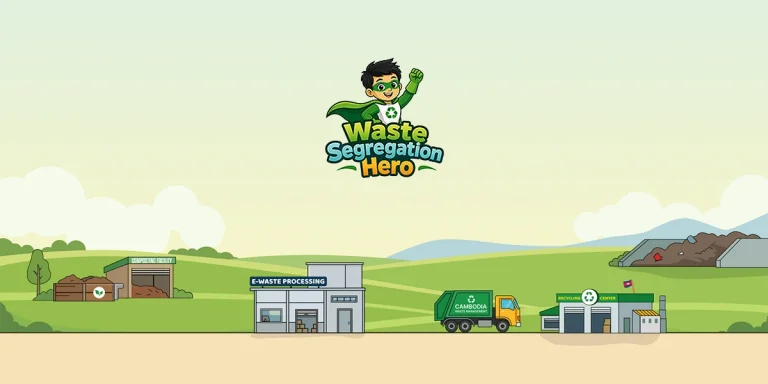
Gamified Environmental Education for Cambodia: The Waste Segregation Game
Pegotec, GIZ, and Cambodia’s Ministry of Environment turn waste segregation into a practice people can adopt.
Cambodia’s Circular Strategy on Environment (2023–2028): Clean, Green, Sustainable sets a national direction for solid waste management. Turning strategy into daily habit, however, takes more than a policy document. People need to practice, and that is where gamified environmental education earns its place.
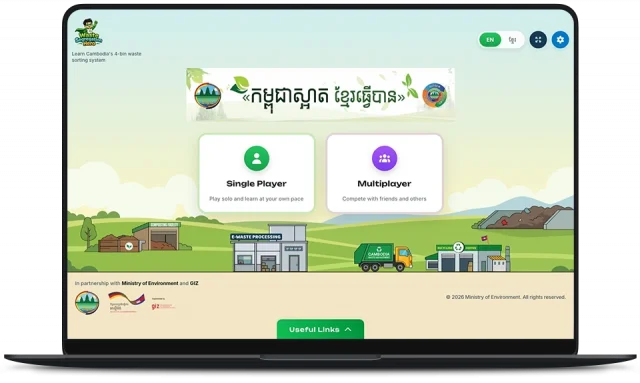
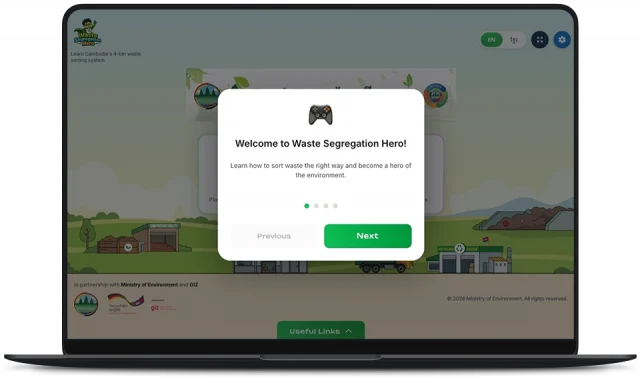
So Pegotec built Waste Segregation Hero for the Deutsche Gesellschaft für Internationale Zusammenarbeit (GIZ) GmbH. The work sits under the Green Growth Initiative for Circular Economy for Cambodia (GGI4CE) program, in partnership with the Ministry of Environment. It teaches the official sorting system through play, in Khmer and English, with students joining on the phones they already carry.
Understanding the Challenge
Mixed waste limits what any recycling system can recover. When organic material, recyclables, and residual waste travel together, valuable resources end up in landfill. As a result, the circular economy stalls before it starts.
Cambodia’s answer is a national system of three bins plus separate battery collection. Knowing that system and applying it correctly are different things. Traditional one-way science communication explains the rule, yet it rarely produces the habit.
GIZ therefore wanted an interactive, learner-centered alternative. Students should be able to access it without a workshop, a trainer, or a budget line for each session. Furthermore, it had to work on a shared phone, run in a classroom on a projector, and stay useful long after the project period closed.
A gamified environmental education tool built for two very different rooms
The application serves two use cases from one codebase, and the facilitated one carries most of the weight.
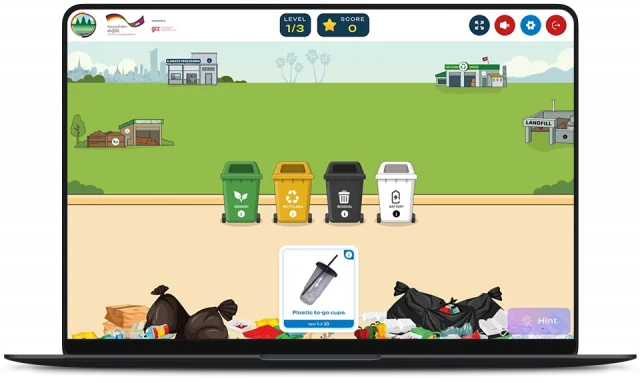
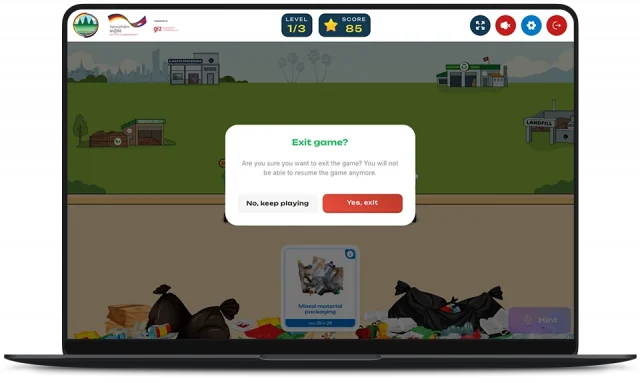
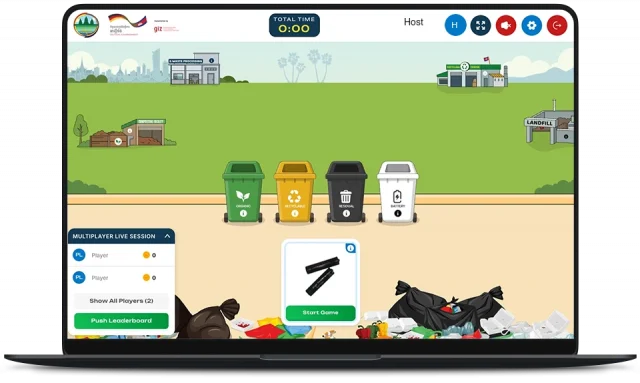
Single-player mode runs in portrait on a phone. Players work through three levels of increasing difficulty, dragging waste cards into the correct bin. Green takes organic waste destined for composting, yellow takes recyclables, and black takes residual waste bound for landfill. A dedicated bin also handles batteries, which need separate treatment.
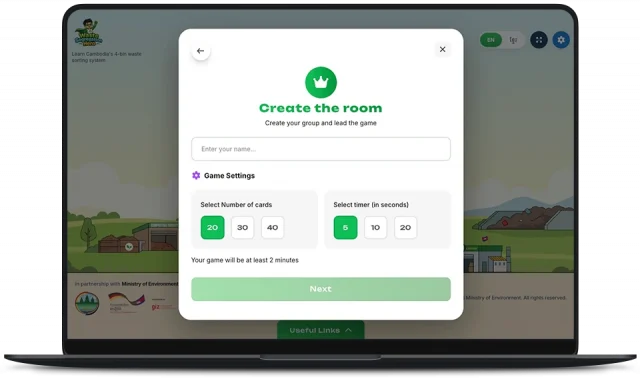
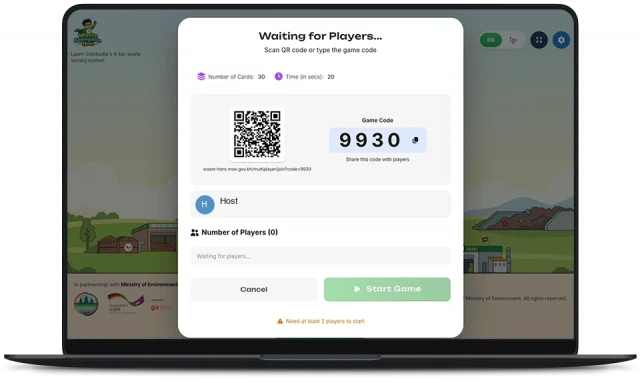
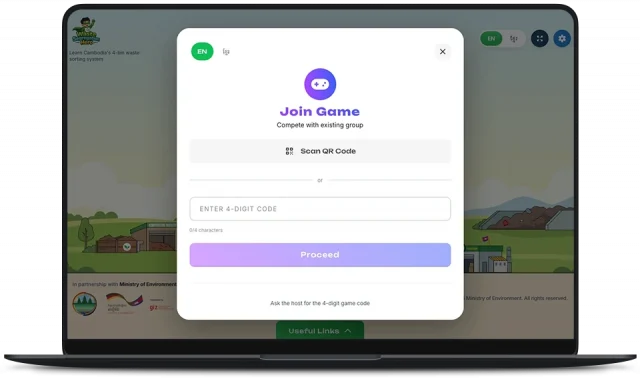
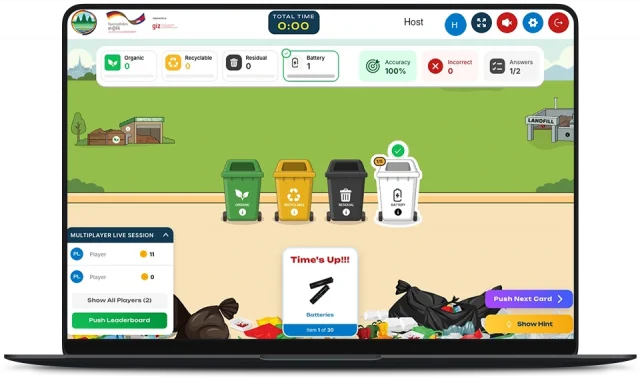
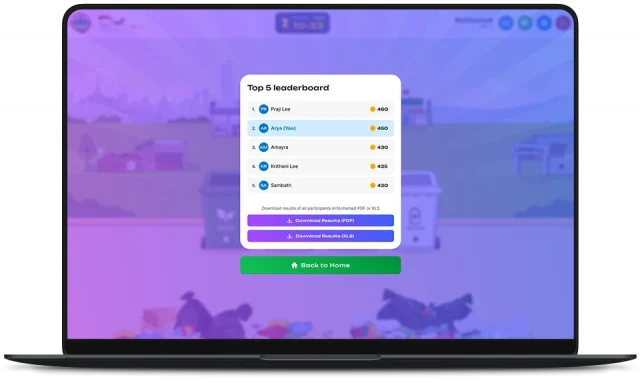
Multiplayer mode turns the same game into a classroom or event activity. A teacher or host opens a session in landscape presenter mode on a projector. Participants then join by scanning a QR code with their own phones. A live leaderboard tracks the session, and when time expires, the top finishers appear on screen while each participant sees their own rank.
One build therefore covers both the individual learner and a room of forty.
Scoring that teaches rather than tests
The mechanics carry the lesson. A correct sort earns points. An incorrect sort returns the card to the pile with an information button, and a correct retry still scores, so a mistake becomes a prompt rather than a dead end.
Filling the green or yellow bin triggers a bonus, plus a composting or recycling animation showing resources returning to use. Filling the black bin costs points instead. A truck animation then carries the contents to a landfill that visibly fills over time. So players see the consequence rather than reading about it.
Waste cards use real photographs of common Cambodian items, supplied by GIZ. Recognition therefore transfers to the actual bin at home. Educational pop-ups add context during play, and every card and bin carries an information button explaining why an item belongs where it does.
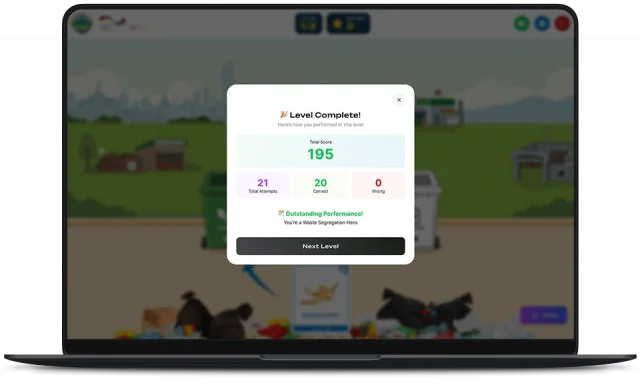
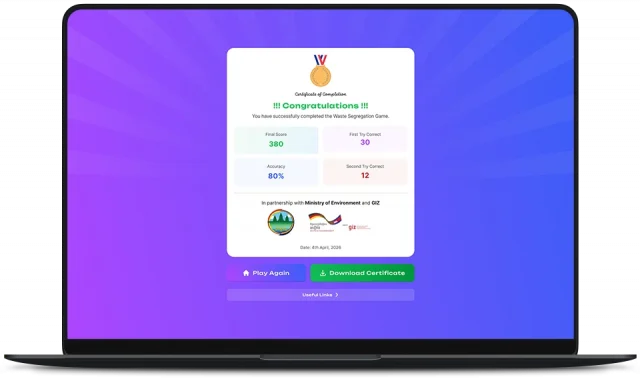
Players who finish all three levels receive a personalized PDF certificate. It shows a gold, silver, or bronze medal, the score, sorting accuracy, and a breakdown of which bins the player handled best.
Building a System That Works
The platform uses a three-tier architecture. React.js drives the game interface, drag-and-drop interactions, and animations. Laravel 12 handles game logic, sessions, content delivery, and certificate generation. MySQL stores waste cards, level configurations, and session data. Meanwhile, WebSockets keep multiplayer leaderboards synchronized in real time.
Responsive design was a functional requirement, not a finish. Drag-and-drop interfaces depend on fixed positioning and predictable touch targets. Accordingly, we designed and tested portrait and landscape as distinct experiences, rather than stretching one layout to fit.
Bilingual delivery and data protection by design
The application is fully bilingual in Khmer and English, with Khmer as the primary language. Native Khmer speakers verified terminology and cultural appropriateness across all content, not only the interface labels.
Data protection follows GIZ’s standards for digital tools and GDPR principles. The design starts from data minimization. Players use a nickname rather than a real name, and a real name appears only if someone chooses to put one on a certificate. Session data stays scoped to the session and deletes automatically. Moreover, only essential cookies load by default, and anything further requires explicit consent.
For a public learning tool aimed at students, collecting less is the responsible design, and it also makes the platform simpler for a ministry to operate.
A content system the Ministry runs without us
The requirement that shaped the most engineering was sustainability. A learning tool that needs a developer to change a question stops being current the moment the contract ends.
Pegotec therefore built a back-office content management system for Ministry staff with ordinary computer skills. They can upload new waste cards with photographs, bilingual names and educational text. They can also edit or remove cards, reassign them between difficulty levels, and maintain a Useful Information section linking to environmental laws, Ministry documents and recycling directories.
As a result, the game can follow changes in national policy without a development budget attached to each update.
Ensuring Quality Through Testing
Testing ran continuously rather than at the end. Unit, integration and end-to-end tests covered the build, and compatibility testing spanned Chrome, Safari, Firefox and Edge in both portrait and landscape.
User acceptance testing with the Ministry’s Web-based Training Taskforce validated game mechanics, educational content and bilingual accuracy. Crucially, it also checked whether non-technical staff could actually operate the CMS. Security testing covered input validation, API protection and authentication. Load testing then simulated the concurrent multiplayer sessions a classroom or public launch produces.
Empowering Teams Through Training
Handover was a deliverable in its own right. Pegotec’s Phnom Penh-based coordinator led training for GIZ and Ministry staff in Khmer and English. Sessions covered content management and running multiplayer games, including session timing and basic troubleshooting.
The package includes annotated source code, technical documentation covering architecture and deployment, print-ready user guides in Khmer and English, and the training presentations. Finally, a formal handover session confirmed repository access and signed off on every deliverable.
Pegotec hosts the application, deployed under the Ministry of Environment’s own domain. The Ministry therefore gets a running service under its own name rather than a repository and a hosting problem. The code and documentation stay fully transferable.
Creating Lasting Impact
The audience is high school and university students, reached through sessions the Ministry and its partners run. Because the tool is web-based and bilingual, a session needs a room and a projector rather than printed materials, a traveling trainer, or a budget line for each group.
That changes the economics of environmental education. A conventional workshop has to be rebuilt each time it runs, and its quality follows whoever happens to deliver it. By contrast, the same session can now run in any classroom with the same content, the same scoring, and the same certificate at the end. The Ministry owns the asset and controls who runs it.
How Pegotec Can Help Your Organization
Development partners and NGOs face a recurring problem. Behavior change depends on repetition, while program funding is time-boxed. A digital tool can outlast the program, but only if someone designed it to.
This project shows what that requires in practice. Content a partner institution can maintain without a developer—genuine bilingual delivery rather than a translated veneer. Data protection proportionate to a student audience. Finally, a handover package complete enough that the work actually transfers.
Pegotec has delivered digital systems for GIZ, UNDP, government ministries and development programs across Cambodia and the wider region since 2017, including national-scale public platforms.
Partner With Pegotec for Environmental and Public-Sector Digital Tools
If your program needs a learning tool that keeps working after the funding period, talk to us. We scope the handover at the beginning, not in the final month.
Project Information
Project Start 2026
Technologies
- React.js
- Laravel 12
- PHP
- WebSockets
- MySQL
- REST API
- Responsive UI
- Portrait & Landscape Modes
- Multiplayer Sessions
- QR Code Join
- Live Leaderboard
- PDF Certificates
- Custom CMS
- Bilingual Khmer/English
- GDPR-Aligned Data Protection
- Load & Security Testing
- Hosting